





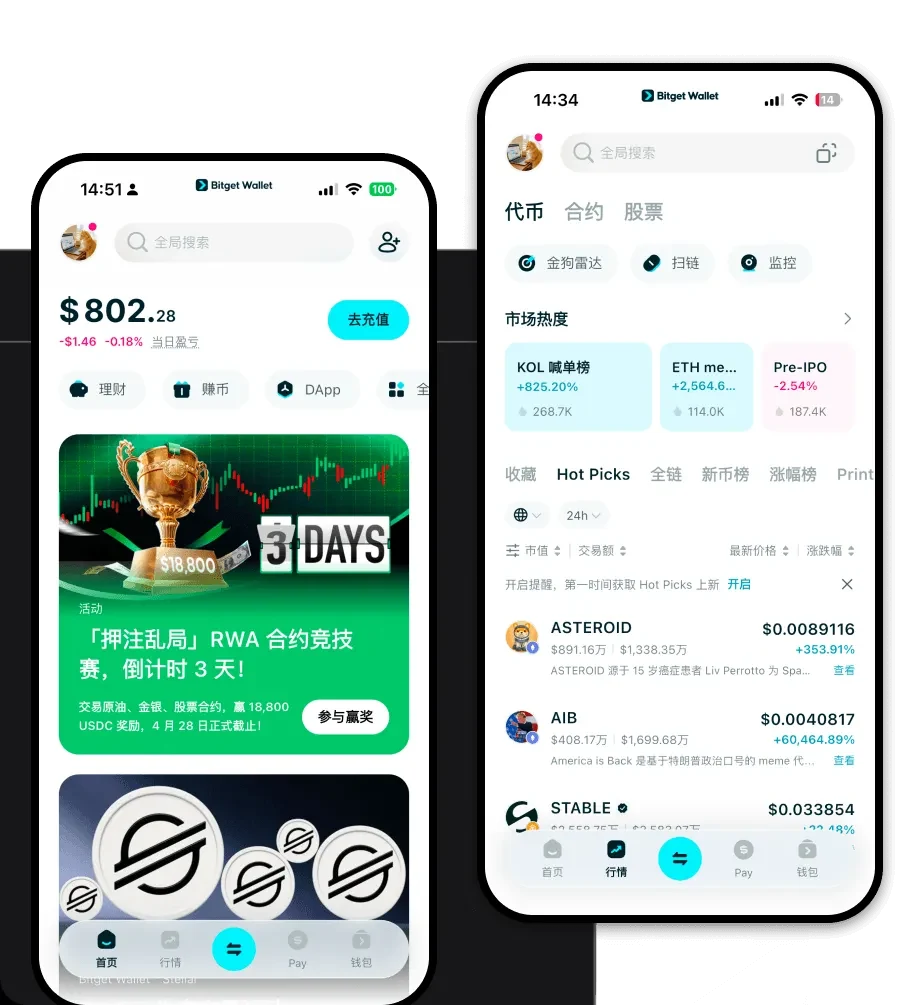
What is a OOD Wallet?
In the rapidly evolving landscape of digital assets, understanding the infrastructure behind your tokens is essential. OOD is an innovative digital asset built on the EVM (Ethereum Virtual Machine) blockchain. Because it operates within the EVM ecosystem, it benefits from the robust security, immense developer activity, and widespread compatibility that Ethereum-based networks offer. OOD is a digital asset accessible via Bitget Wallet, a platform trusted by 40 million users, designed for secure management and Web3 exploration. As a user, choosing the right wallet is the first step in ensuring that your OOD tokens are not only secure but also easily accessible for all your on-chain activities.
Download Bitget OOD Wallet
To start your journey with OOD, you need a tool that bridges the gap between complex blockchain technology and user-friendly interface. Bitget Wallet provides exactly that. It is designed to be the ultimate companion for your OOD tokens, offering a seamless experience whether you are using a desktop browser or a mobile device. You can download Bitget Wallet to access a comprehensive suite of features, including private key self-custody, which ensures you remain the sole owner of your assets. The application is fully optimized for iOS, Android, and browser extensions, providing a consistent experience across all your devices while supporting over 130+ mainstream blockchains.
Why Choose Bitget OOD Wallet?
When dealing with tokens like OOD, which are often community-driven and require high liquidity for active trading, the choice of wallet matters. Bitget Wallet stands out for several reasons:
- Native EVM Compatibility: Since OOD is an EVM token, Bitget Wallet offers seamless integration with smart contracts, allowing you to interact with decentralized applications without compatibility issues.
- High-Liquidity Access: The wallet aggregates hundreds of DEXs and cross-chain bridges, ensuring you always get the best price and efficient execution when trading OOD.
- Community-Centric Tools: Designed for the modern crypto user, the interface makes it easy to track community-driven trends and participate in ecosystem governance.
- Robust Security Architecture: With a 300 million USD user protection fund, Bitget Wallet provides an extra layer of security, giving you peace of mind while managing your portfolio.
How to Create a OOD Wallet
Setting up your OOD wallet is a straightforward process designed to get you into the Web3 space quickly:
1. Download and Install: Visit the official website or your app store to download Bitget Wallet on your preferred device.
2. Create a New Wallet: Open the app and select 'Create Wallet.' You will be prompted to set a strong password to protect the local application.
3. Backup Your Recovery Phrase: This is the most critical step. Write down your 12 or 24-word recovery phrase on paper and store it offline. Never share this with anyone.
4. Configure the Network: Since OOD is an EVM token, ensure your wallet is set to the correct network (e.g., Ethereum or the specific Layer-2 network OOD is deployed on).
5. Add OOD Token: Use the 'Add Token' feature and paste the OOD contract address to make it visible in your dashboard.
What Can You Do With a OOD Wallet?
Having a OOD wallet opens up a world of possibilities within the crypto ecosystem. Here is how you can utilize your wallet effectively:
Trading: You can execute instant swaps on decentralized exchanges directly within the wallet interface, taking advantage of deep liquidity for your OOD tokens.
Holding: Use the wallet as a secure vault for long-term storage, keeping your assets offline and away from centralized exchange risks.
Speculative Investment: Monitor your portfolio in real-time and leverage the wallet's market data tools to make informed decisions during periods of high market volatility.
Community Participation: Engage directly with community-driven projects, participate in governance votes, or interact with decentralized social platforms that support OOD.
How OOD Wallets Are Different from Other Crypto Wallets
Not all wallets are created equal, especially when dealing with EVM-based tokens like OOD. Unlike wallets designed for the UTXO model (like Bitcoin), which focus on transaction inputs and outputs, a OOD wallet on the EVM utilizes an account-based model. This means your wallet acts like a bank account that maintains a balance and a nonce for transaction sequencing. Furthermore, while some wallets struggle with gas fee estimation, Bitget Wallet optimizes for the EVM environment, ensuring that your transactions are processed at the right speed and cost. This architectural difference is vital for traders who need to react quickly to market movements without being bogged down by inefficient gas management or slow network synchronization.
