





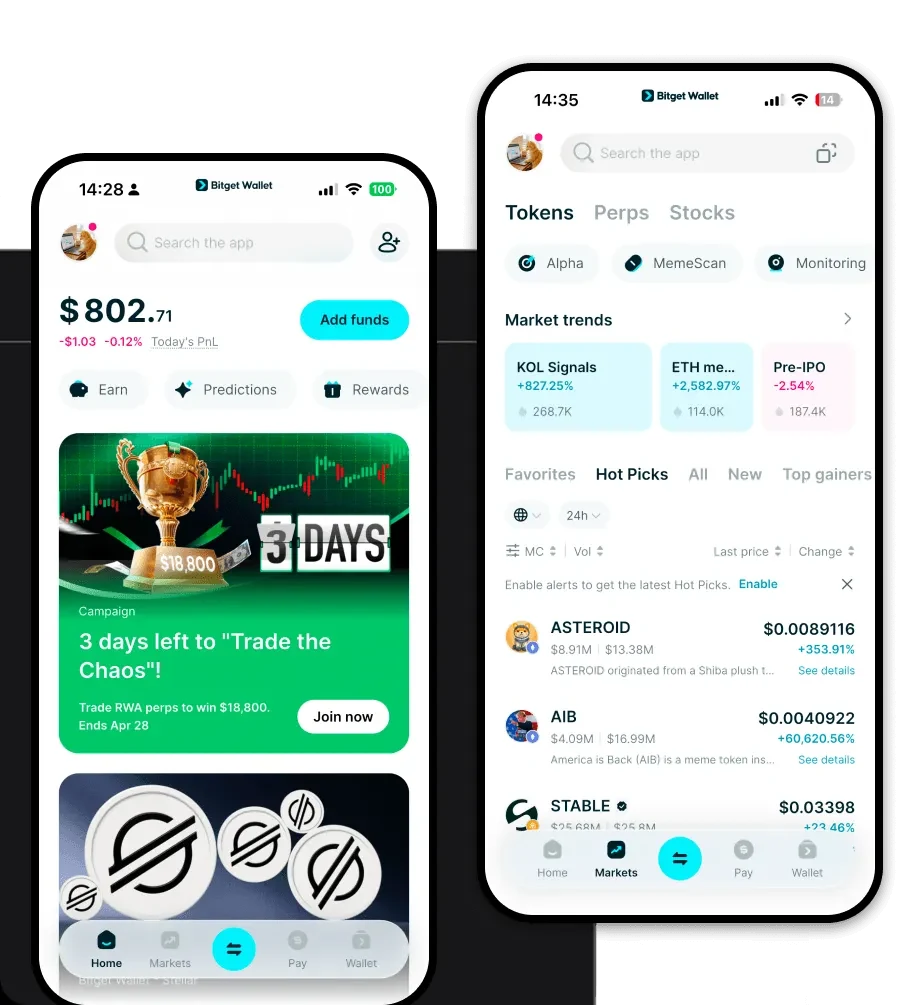
What is a YLP Wallet?
A YLP wallet is a dedicated digital interface designed to securely store, manage, and interact with YLP (Yield Liquidity Provider) tokens. These tokens are typically associated with decentralized exchange (DEX) platforms like GMX or similar perpetual trading protocols. YLP tokens represent a liquidity provider's share in a multi-asset pool, enabling users to earn yields from trading fees and liquidations while providing liquidity for traders. Because YLP operates on the EVM (Ethereum Virtual Machine) ecosystem, a wallet that supports this token must be fully compatible with EVM standards, allowing for seamless interaction with smart contracts, decentralized applications (DApps), and cross-chain protocols.
Download Bitget YLP Wallet
To start managing your assets effectively, you need a tool that bridges the gap between complex DeFi protocols and user-friendly accessibility. Bitget Wallet is the premier choice for YLP holders, offering a non-custodial solution where you remain the sole owner of your private keys. Whether you are operating on a desktop or on the go, the platform ensures total compatibility with your lifestyle.
You can download Bitget Wallet to access a unified experience across iOS, Android, and browser extensions. By choosing Bitget Wallet, you benefit from a multi-chain architecture that supports over 130 public chains, ensuring that your YLP tokens and other EVM-compatible assets are always accessible. The wallet is designed to provide a smooth, self-custodial experience, meaning your assets are never held by a third party, giving you complete control over your financial destiny.
Why Choose Bitget YLP Wallet?
Navigating the DeFi landscape, especially with liquidity provider tokens, requires more than just a basic wallet. Bitget Wallet is engineered to address the specific needs of EVM-based DeFi participants:
- Seamless EVM Integration: Built with native support for the Ethereum Virtual Machine, the wallet automatically detects and manages your YLP tokens, ensuring that you can interact with GMX or similar perpetual DEXs without manual configuration errors.
- Optimized Gas Fee Management: The wallet features an intelligent gas tracker that helps you time your transactions, ensuring you don't overpay for liquidity provisioning or staking actions during periods of high network congestion.
- Robust Security Architecture: With a $300 million user protection fund and advanced MPC (Multi-Party Computation) technology, Bitget Wallet adds a crucial layer of security, protecting your liquidity positions from common vulnerabilities.
- Integrated DApp Browser: You can access your favorite perpetual trading platforms directly within the app, allowing you to stake YLP or track your yields without ever needing to export your private keys to risky third-party sites.
- Real-Time Portfolio Tracking: The interface provides a clear, real-time dashboard that reflects your share in multi-asset pools, making it easier to monitor your yield generation and total asset value at a glance.
How to Create a YLP Wallet
Setting up your wallet is a straightforward process designed to get you into the DeFi ecosystem within minutes. Follow these five steps to get started:
Step 1: Download the AppVisit the official Bitget Wallet website or your device's app store to download the official application. Ensure you are using the verified version to maintain security.
Step 2: Initialize Your WalletOpen the app and select 'Create a New Wallet.' The system will prompt you to set a strong, unique password for your local device access.
Step 3: Secure Your Recovery PhraseThe app will generate a 12 or 24-word recovery phrase. Write this down on paper and store it in a secure, offline location. Never share this with anyone, as it is the only way to recover your funds if you lose your device.
Step 4: Configure EVM NetworkBy default, Bitget Wallet is already configured for the major EVM chains. If your YLP tokens are on a specific network like Arbitrum or Avalanche, simply ensure that chain is enabled in your 'Manage Tokens' list.
Step 5: Import or DepositYou can now copy your wallet address and send your YLP tokens from an exchange or another wallet directly into your new Bitget Wallet.
What Can You Do With a YLP Wallet?
Holding YLP tokens in a self-custodial wallet unlocks the full potential of decentralized finance. Here is how you can actively utilize your YLP assets:
- Earning trading fee revenue: By holding YLP in your wallet, you automatically participate in the distribution of trading fees generated by the underlying perpetual protocol, which are typically paid out in ETH or stablecoins.
- Providing liquidity for perpetual trading: Your YLP tokens act as the counterparty for traders; by holding them, you are directly providing the necessary liquidity that allows the DEX to function for leveraged trading.
- Staking for yield farming: Many protocols allow you to stake your YLP tokens into additional smart contracts to earn bonus governance tokens or higher APY rewards, which you can easily manage through the Bitget DApp browser.
- Portfolio diversification: Since YLP tokens represent a multi-asset basket, they provide instant exposure to a variety of top-tier crypto assets, allowing you to diversify your portfolio without needing to buy each asset individually.
- Risk exposure to leveraged trading: As a liquidity provider, you take the other side of traders' positions, which allows you to gain exposure to the performance of the protocol's trading volume and the overall market sentiment.
How YLP Wallets Are Different from Other Crypto Wallets
Not all crypto wallets are created equal, especially when dealing with DeFi-specific tokens like YLP. Unlike simple wallets designed for holding Bitcoin or basic ERC-20 tokens, a YLP-ready wallet must excel in the EVM environment.
First, the distinction lies in the Account Model. While Bitcoin uses a UTXO (Unspent Transaction Output) model, YLP tokens exist on EVM-based chains, which use an account-based model. Your Bitget Wallet is optimized to handle the complexity of EVM smart contract interactions, ensuring that calls to liquidity pools—which require specific data inputs—are executed flawlessly. Furthermore, in the EVM ecosystem, 'gas' is the primary mechanism for transaction prioritization. A specialized wallet like Bitget offers advanced gas fee adjustment tools that are essential when you are interacting with volatile liquidity pools, where speed can be the difference between a profitable trade and a missed opportunity.
Finally, standard wallets often struggle to display complex DeFi assets. A YLP wallet is built to recognize the underlying value of your multi-asset pool shares, providing a clearer view of your real-time index pricing and total liquidity position compared to a wallet that simply shows a token balance.
