





What is a MIC Wallet?
A MIC wallet is a secure digital interface that allows you to store, manage, and interact with MIC (Mithril Cash), a decentralized algorithmic stablecoin protocol. Since MIC operates on the EVM (Ethereum Virtual Machine) blockchain, a compatible wallet is essential for accessing its unique features. MIC is designed to provide a stable, scalable, and decentralized asset for the DeFi ecosystem, and having the right wallet ensures you can participate in its seigniorage shares model and governance mechanisms without friction.
Download Bitget MIC Wallet
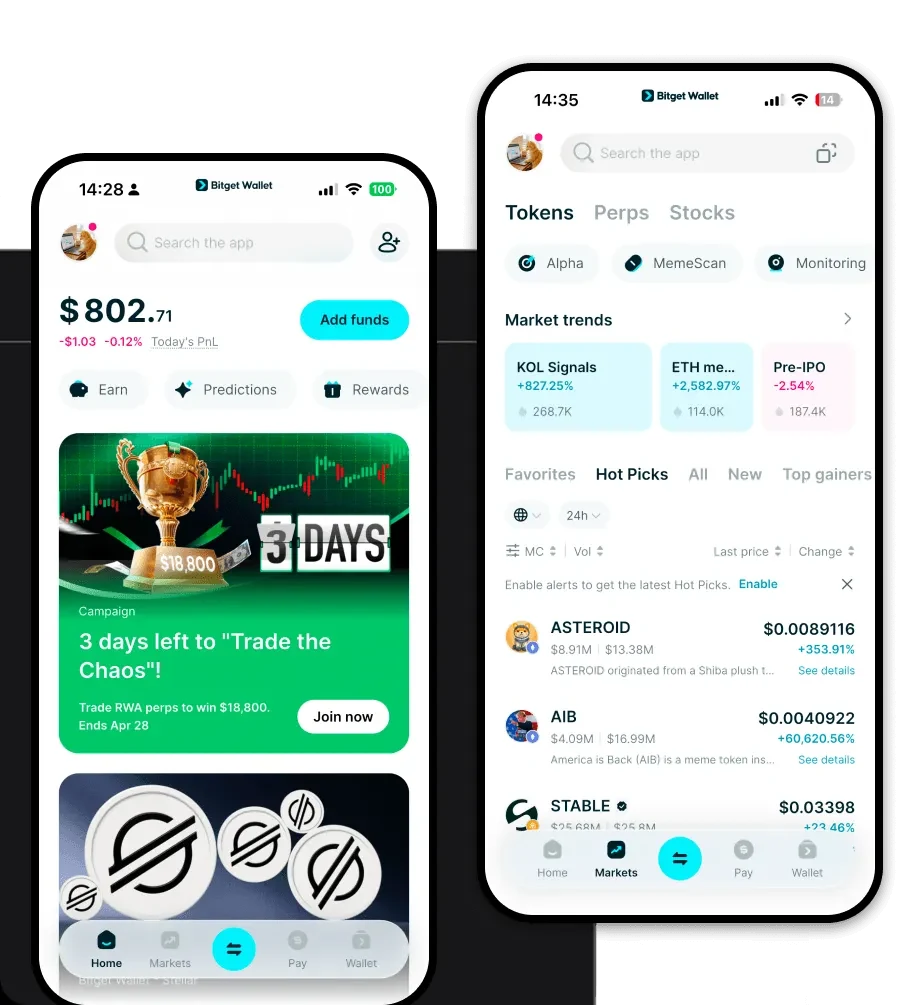
To fully experience the potential of Mithril Cash, you need a robust tool that bridges the gap between complex DeFi protocols and user-friendly interfaces. We recommend that you download Bitget Wallet to get started. Bitget Wallet provides a seamless environment for MIC holders, featuring full self-custody of your private keys, which means you maintain complete control over your assets. Whether you prefer managing your portfolio on the go via iOS or Android, or you need a browser extension for deep DeFi interaction, Bitget Wallet supports your needs with an intuitive, multi-chain ecosystem that makes managing EVM-based assets simple and secure.
Why Choose Bitget MIC Wallet?
Choosing the right wallet for an algorithmic stablecoin like MIC is critical, especially within the complex EVM environment. Here is why Bitget Wallet stands out:
- Seamless EVM Compatibility: Bitget Wallet is architected to handle EVM-based assets natively, ensuring that interacting with MIC's algorithmic stability mechanisms is smooth and free from compatibility errors.
- Advanced Security Infrastructure: With over $300 million in user protection funds, Bitget Wallet offers a fortified layer of safety for your digital assets, mitigating common risks associated with DeFi protocols.
- Optimized Gas Fee Management: The wallet provides real-time gas fee tracking and optimization tools, which is crucial for MIC users who need to manage staking or liquidity provision efficiently without overpaying.
- Unified Web3 Experience: Beyond just storage, the wallet aggregates hundreds of DEXs and cross-chain bridges, allowing you to swap MIC or other tokens instantly within a single interface.
How to Create a MIC Wallet
Setting up your wallet to handle MIC is straightforward. Follow these steps to ensure you are ready to participate in the DeFi ecosystem:
- Install the App: Download the Bitget Wallet application from the official website or your preferred app store.
- Create a New Wallet: Open the app and select 'Create Wallet.' Ensure you back up your mnemonic phrase in a secure, offline location—this is your master key.
- Configure EVM Settings: Since MIC is an EVM-compatible asset, your default Ethereum address is already set up to receive and send MIC.
- Add MIC to Your Assets: Navigate to the 'Add Token' feature, search for the MIC contract address on the EVM chain, and add it to your wallet dashboard.
- Verify Access: Once added, your MIC wallet address will appear, allowing you to receive tokens from exchanges or other liquidity pools.
What Can You Do With a MIC Wallet?
With Bitget Wallet, you can maximize the utility of your MIC holdings. Here is how you can engage with the protocol:
- Staking: Use your wallet to lock your MIC into staking contracts, participating in the protocol's stability mechanisms while earning potential rewards.
- Providing Liquidity: Utilize the built-in DApp browser to connect your wallet to decentralized exchanges, where you can provide liquidity for MIC pairs and earn transaction fees.
- Yield Farming: Leverage your assets in various yield farming strategies, moving MIC into protocols that offer the best returns within the DeFi space.
- Governance Voting: Participate in decentralized governance by using your wallet to sign transactions that influence the future direction of the Mithril Cash protocol.
How MIC Wallets Are Different from Other Crypto Wallets
Managing MIC requires a wallet that understands the nuances of the EVM ecosystem. Unlike Bitcoin wallets that rely on the UTXO model, an EVM-compatible wallet like Bitget Wallet uses an account-based model. This means your wallet tracks a state balance, which is essential for interacting with complex smart contracts found in DeFi. Furthermore, while some wallets struggle with high gas fees, Bitget Wallet is optimized for the EVM environment, allowing you to track network congestion in real-time. This ensures that when you execute a transaction—whether it is a simple transfer or a complex interaction with a liquidity pool—you are doing so with the most efficient fee structure possible, a feature often overlooked by standard crypto wallets.
