





What is an Echo Wallet?
An Echo wallet is a specialized cryptocurrency tool designed to securely store, manage, and interact with the Echo token. Built upon the Ethereum Virtual Machine (EVM) ecosystem, Echo represents a cutting-edge exploration of DeFi mechanics. Specifically, Echo originates from an experimental exploration of the Uniswap v4 hook, leveraging immutable hooks for self-borrowed position amplification within the pool, without lenders or oracles. Because the team is anonymous and the project is positioned as a research-oriented prototype aimed at DeFi researchers and liquidity providers, the goal is to validate native on-chain leverage and mathematically verifiable limits. Choosing the right wallet is crucial for interacting with these advanced, immutable smart contracts safely.
Download Bitget Echo Wallet
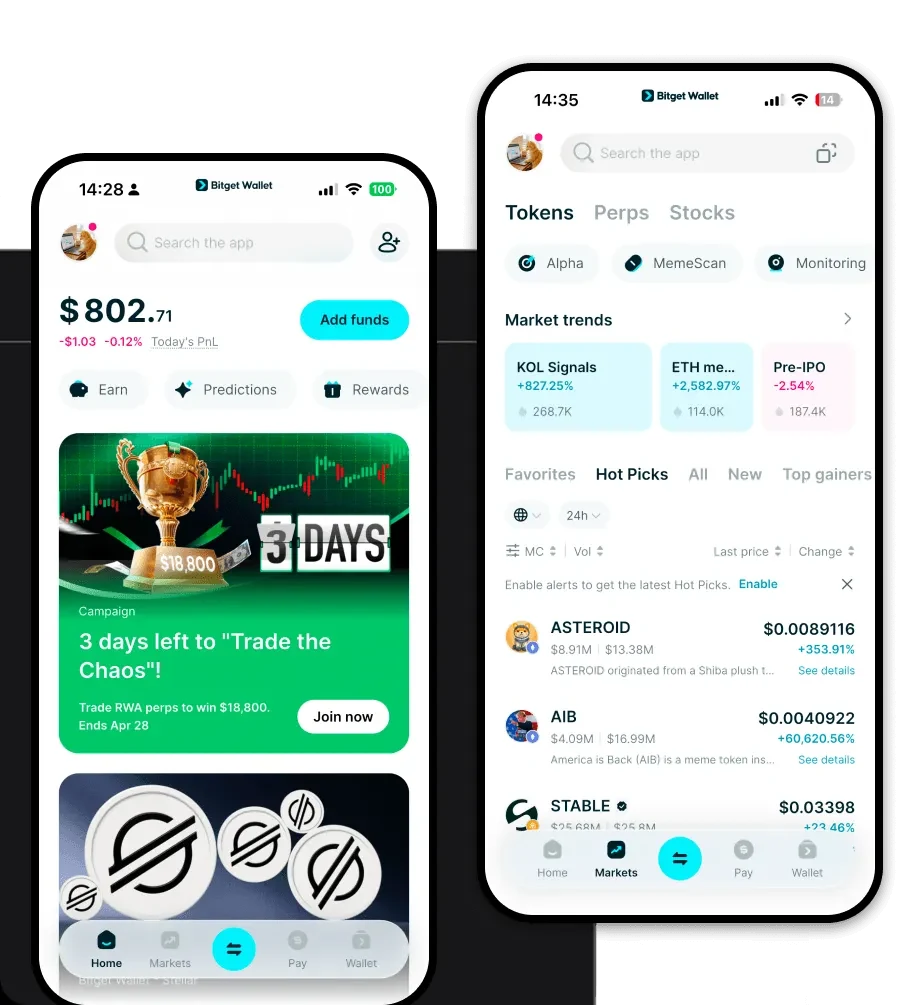
To interact with the EVM ecosystem and manage your Echo assets efficiently, you need a robust, self-custodial solution. Bitget Wallet stands out as a premier choice, offering a seamless interface for both beginners and advanced DeFi researchers. It provides comprehensive multi-chain support, ensuring you can manage Echo alongside your other EVM assets without switching platforms. With Bitget Wallet, you maintain full control over your private keys, adhering to the core crypto principle of "not your keys, not your coins." Whether you prefer mobile flexibility or desktop integration, you can download Bitget Wallet across iOS, Android, and as a browser extension to get started immediately.
Why Choose Bitget Echo Wallet?
- EVM Ecosystem Optimization: Bitget Wallet is built with deep EVM integration, ensuring perfect compatibility with the smart contracts that power Echo, allowing for smoother transaction signing and gas estimation.
- Advanced DeFi Interface: Given that Echo relies on Uniswap v4 hooks, Bitget Wallet’s built-in DApp browser and aggregation tools make it easier to navigate complex protocols without needing external bridges.
- Robust Security Protocols: With a $300 million user protection fund and extensive on-chain security monitoring, Bitget Wallet provides a safety net for users engaging with experimental DeFi prototypes.
- Seamless Multi-Chain Experience: Beyond just the EVM, Bitget Wallet aggregates hundreds of DEXs and bridges, providing a unified dashboard to manage your entire portfolio, regardless of the blockchain network.
How to Create an Echo Wallet
Setting up your wallet to handle Echo is a straightforward process designed to keep your assets secure:
- Download and install the Bitget Wallet application from the official website or your device's app store.
- Select 'Create a New Wallet' and ensure you securely back up your 12-word seed phrase; never share this with anyone.
- Set a strong, unique password for your local device access to add an extra layer of protection.
- Once the wallet is initialized, ensure you are connected to the Ethereum or relevant EVM network where your Echo tokens reside.
- Use the 'Add Token' or 'Import' function, pasting the official Echo contract address to ensure your wallet displays your balance correctly.
What Can You Do With an Echo Wallet?
Using Bitget Wallet allows you to fully leverage the experimental nature of Echo. You can engage in position amplification by utilizing the protocol's unique self-borrowing mechanics to maximize your exposure. The wallet facilitates liquidity provision, allowing you to contribute to pools and participate in the DeFi ecosystem directly. It serves as a hub for DeFi research experimentation, enabling you to test the limits of immutable hooks and on-chain leverage. Furthermore, you can utilize the wallet to engage in algorithmic margin trading, taking advantage of the protocol's oracle-free architecture to execute strategies that rely on mathematically verifiable limits rather than external price feeds.
How Echo Wallets Are Different from Other Crypto Wallets
While many wallets offer basic storage, an Echo-compatible wallet like Bitget is designed to handle the complexities of the EVM account model. Unlike wallets designed for UTXO-based chains (like Bitcoin), which focus on transaction inputs and outputs, an EVM-based wallet must manage complex smart contract interactions, gas fees, and token approvals. Because Echo utilizes immutable smart contract design and v4 hooks, your wallet needs to be capable of parsing specific function calls and managing high-frequency DeFi interactions. Bitget Wallet excels here by providing a clear view of contract interactions and gas optimization, which is vital when dealing with experimental DeFi tools that require precise timing and cost management.
