



What is an AGIN Wallet?
An AGIN wallet is a digital interface that allows you to interact with the AGIN token, which operates on the EVM (Ethereum Virtual Machine) blockchain. Because AGIN is built on EVM infrastructure, it requires a wallet that supports the Ethereum ecosystem's standards for addresses, smart contracts, and gas fee management. AGIN is a project integrated within the Bitget Wallet ecosystem, designed to leverage the security and reliability of this wallet to provide users with a secure gateway to explore Web3 applications, manage their assets, and engage with decentralized finance protocols.
As an infrastructure-focused asset, AGIN benefits significantly from being housed in a wallet that understands the nuances of decentralized finance (DeFi). Whether you are a long-term holder or an active trader, having a dedicated AGIN wallet ensures you maintain full control over your private keys while interacting seamlessly with the broader EVM landscape.
Download Bitget AGIN Wallet
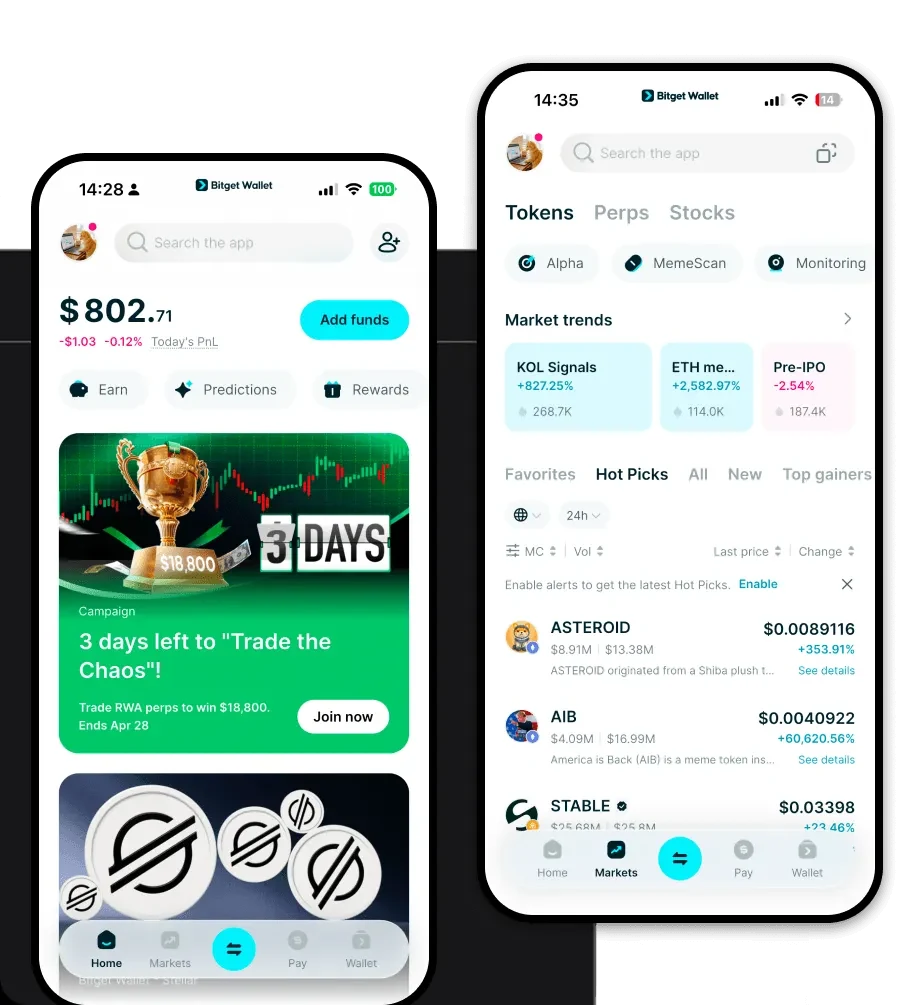
To start managing your tokens, you need a reliable application that bridges the gap between complex blockchain interactions and user-friendly design. Bitget Wallet is widely recognized as the best wallet for AGIN, offering a robust platform that supports multi-chain interoperability and self-custody. Users can easily download Bitget Wallet across various platforms, including iOS, Android, and as a browser extension for desktop users.
By choosing this AGIN wallet app, you are ensuring that your assets are not only accessible but also protected by industry-leading security protocols. The wallet allows you to import existing addresses or create new ones, providing a comprehensive view of your portfolio across multiple chains, which is essential for any serious EVM token holder.
Why Choose Bitget AGIN Wallet?
When selecting the best wallet for AGIN, users need to look beyond basic storage. Bitget Wallet stands out due to its specific architecture tailored for EVM-based infrastructure projects:
- EVM Native Compatibility: Unlike generic wallets, Bitget is built to handle the complexities of the EVM ecosystem, ensuring that your AGIN transactions are executed with precision and full compatibility with standard smart contracts.
- Optimized Gas Fee Management: The wallet provides real-time gas fee estimations and suggests the most efficient transaction speeds, helping you save on costs when interacting with high-traffic DeFi protocols.
- Robust Security Fund: With a $300 million user protection fund, Bitget adds an extra layer of security that goes beyond mere software protection, providing peace of mind for your decentralized asset management.
- Seamless DApp Integration: Connect your AGIN wallet address to hundreds of decentralized applications, yield farms, and NFT marketplaces without ever exposing your private keys to external websites.
- Cross-Chain Functionality: Since AGIN operates within the EVM space, you often need to move assets between different chains; Bitget simplifies this with built-in cross-chain bridges.
How to Create an AGIN Wallet
Creating your AGIN wallet address is a straightforward process that prioritizes security. Follow these five steps to get started:
1. Download and Install: Visit the official website and download the Bitget Wallet application for your preferred device (mobile or browser extension).
2. Create a New Identity: Open the app and select 'Create Wallet'. You will be asked to set a strong password to protect the local application interface.
3. Secure Your Seed Phrase: The app will generate a 12 or 24-word recovery phrase. Write this down on physical paper and store it in a secure location. Never share this with anyone, as it grants full access to your AGIN wallet address.
4. Activate the EVM Network: Once inside the wallet, ensure the EVM network is active. Bitget Wallet usually enables this by default, allowing you to manage your tokens immediately.
5. Add AGIN Token: Select the 'Add Token' feature and input the official contract address for AGIN to ensure it appears in your wallet dashboard for easy tracking and trading.
What Can You Do With an AGIN Wallet?
Once you have set up your wallet, you gain access to a variety of functions essential for participating in the AGIN ecosystem:
- Trading: You can use your wallet to execute trades on decentralized exchanges (DEXs), swapping your AGIN for other assets directly through the integrated swap interface.
- Staking: Participate in DeFi protocols by staking your AGIN tokens directly from your wallet to earn yield, contributing to the network's liquidity while growing your holdings.
- Holding: Utilize the wallet as a secure self-custody vault to safely store your AGIN for the long term, away from the risks associated with centralized exchanges.
- Governance Voting: Use your AGIN wallet to connect to DAO platforms and participate in governance voting, allowing you to have a say in the future direction of the AGIN project.
- Cross-Chain Swaps: Effortlessly move your assets between different EVM-compatible chains, ensuring that your AGIN is always positioned exactly where you need it for maximum utility.
How AGIN Wallets Are Different from Other Crypto Wallets
AGIN wallets, specifically those operating in the EVM space like Bitget, differ significantly from Bitcoin or UTXO-based wallets. Bitcoin wallets are based on the Unspent Transaction Output (UTXO) model, which focuses on tracking individual transaction inputs and outputs. In contrast, AGIN wallets operate on an account-based model, which is much more conducive to smart contract interactions and complex DeFi operations.
Furthermore, EVM wallets must handle 'Gas'—the fee paid to miners or validators to process transactions. Bitget Wallet optimizes this interaction by providing a user-friendly interface that calculates these costs automatically, whereas more primitive wallets might leave the user to guess the appropriate fee, often leading to stuck or failed transactions. By focusing on the EVM ecosystem, an AGIN wallet provides a faster, more integrated experience that is better suited for the modern, fast-paced world of decentralized finance.
