





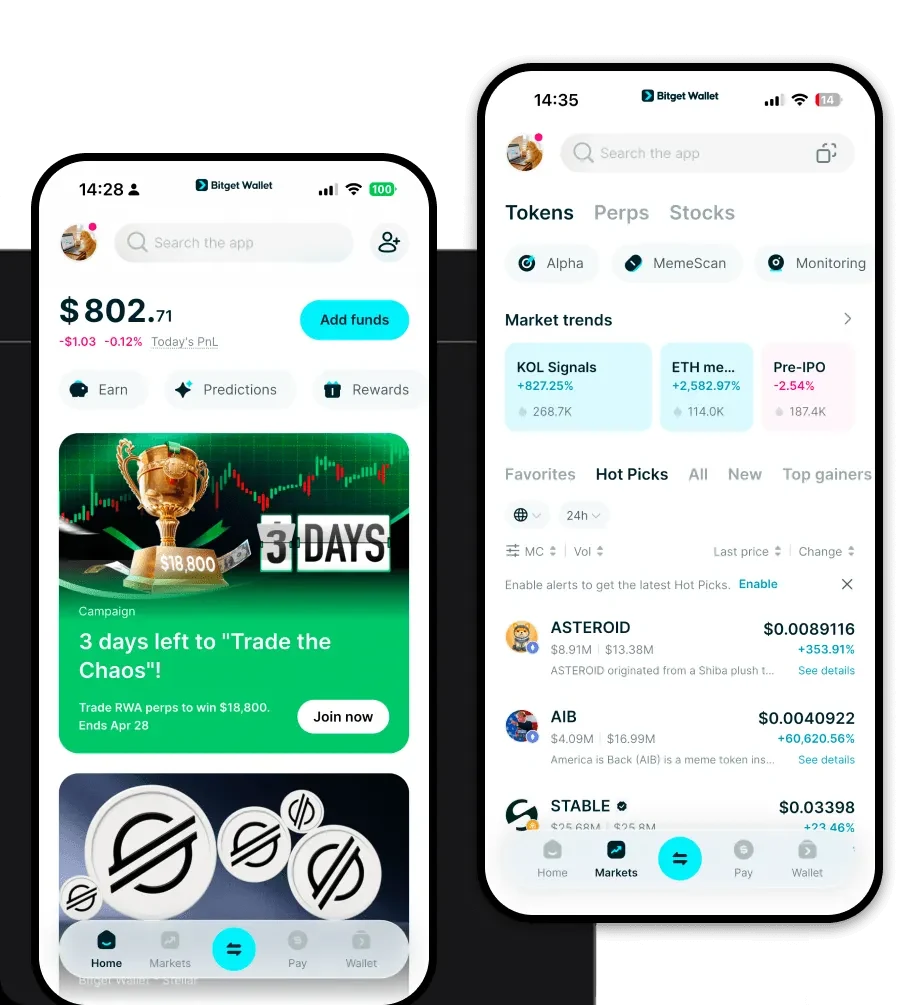
What is an ESB Wallet?
An ESB wallet is a specialized digital interface designed to interact with the ESB token, which operates primarily within the EVM (Ethereum Virtual Machine) blockchain ecosystem. As a critical piece of infrastructure in the decentralized space, ESB requires a wallet that can handle smart contract interactions, token transfers, and cross-chain functionality with ease. Are you looking for a reliable and secure crypto wallet for your ESB? Bitget Wallet will be your best choice. Trusted by 40 million users, you can freely explore Web3 on Bitget Wallet. Start your journey now! By using a dedicated ESB wallet, you ensure that your assets are not only stored securely but are also ready to be utilized across the vast array of DeFi applications available on the EVM network.
Download Bitget ESB Wallet
Getting started with your ESB management is straightforward. To begin, you can download Bitget Wallet, which is available across iOS, Android, and as a browser extension. This flexibility ensures that whether you are on the go or working from a desktop, your assets remain synchronized. Bitget Wallet offers full self-custody, meaning you retain complete control over your private keys and seed phrases, ensuring that no third party can access your funds. With native support for multiple chains, you can easily manage your ESB alongside other major assets without switching applications.
Why Choose Bitget ESB Wallet?
When selecting the best wallet for ESB, users look for features that bridge the gap between complex infrastructure and user-friendly design. Bitget Wallet excels in the EVM ecosystem for several key reasons:
- EVM Compatibility: Seamlessly interact with decentralized applications, import existing wallets via seed phrase, and manage ESB without network friction.
- Advanced Security Protocols: Benefit from a platform backed by a $300 million user protection fund, ensuring your assets are shielded against systemic risks.
- Cross-Chain Interoperability: Effortlessly bridge assets between different networks, allowing you to move your ESB and other tokens with minimal latency.
- Scalable Architecture: The wallet is built to handle high-frequency transactions and complex smart contract interactions, ensuring your ESB wallet app remains responsive during peak network congestion.
- Decentralized Network Security: Experience the peace of mind that comes with a non-custodial design, where you are the sole owner of your assets.
How to Create an ESB Wallet
Creating your wallet is a five-step process designed to prioritize your security:
1. Download and install the Bitget Wallet app from the official website or your app store.2. Select 'Create a Wallet' and set a strong, unique password to protect the local application.3. Carefully back up your 12-24 word recovery phrase. Store this offline in a secure location, as it is the only way to recover your ESB wallet address if your device is lost.4. Select your preferred network, ensuring it aligns with the EVM standards where ESB resides.5. Once the wallet is initialized, navigate to the asset list and click the '+' icon to add ESB by searching for its contract address, making it visible in your dashboard.
What Can You Do With an ESB Wallet?
Having an ESB wallet opens up a wide range of utility within the infrastructure sector of the crypto market. You can engage in token trading, swapping ESB for other assets directly within the integrated DEX aggregators. You can participate in liquidity provision, contributing your ESB to decentralized pools to earn fees. Users can also engage in staking for rewards, locking their tokens to support network operations while earning yield. Additionally, you can participate in decentralized governance voting, using your ESB holdings to influence protocol decisions, and execute cross-chain asset transfers to move your ESB across different EVM-compatible networks seamlessly.
How ESB Wallets Are Different from Other Crypto Wallets
Unlike traditional wallets, an ESB wallet optimized for the EVM ecosystem functions differently than those designed for UTXO-based chains like Bitcoin. In the EVM environment, your wallet uses an account-based model, which is essential for executing smart contracts. This allows for complex interactions with DeFi protocols that UTXO wallets cannot easily support. Furthermore, while Bitcoin wallets focus on transaction inputs and outputs, your ESB wallet manages gas fees, which are the fuel for every transaction on the network. Bitget Wallet optimizes these gas fees, providing real-time estimations to ensure your transactions are both cost-effective and processed at the desired speed, providing a superior experience compared to generic, non-optimized wallets.
