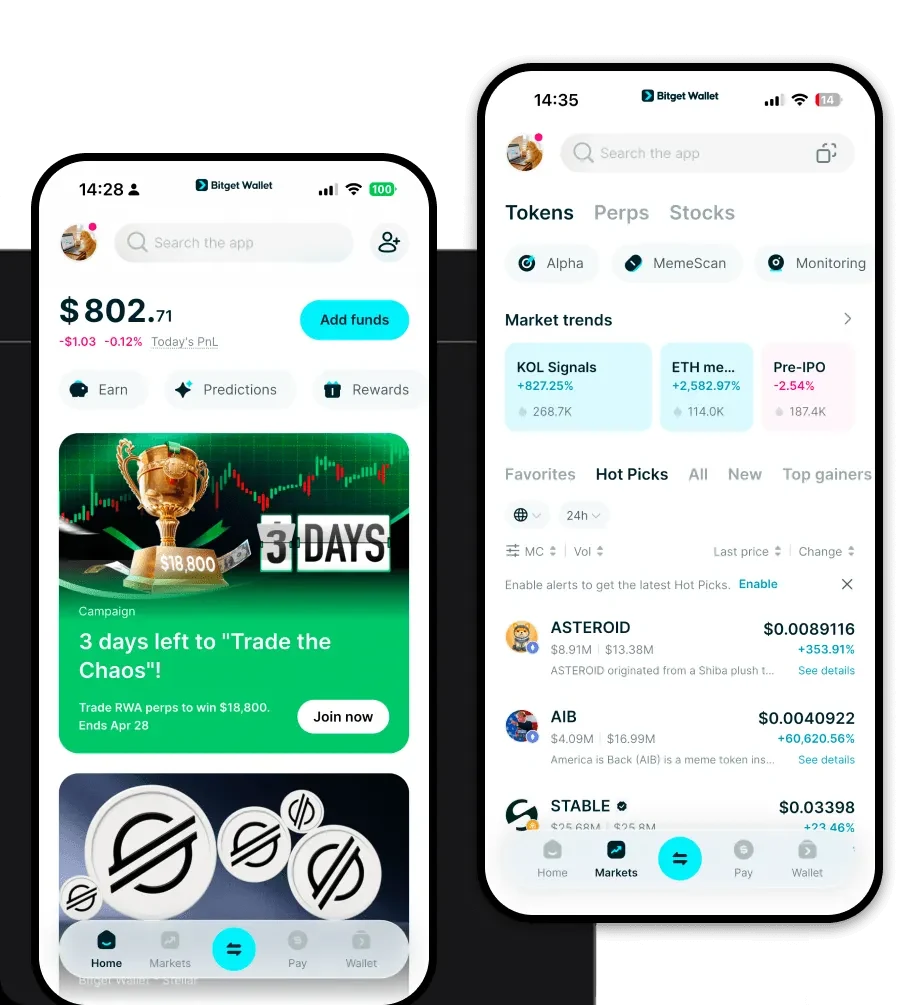


## 1. What is a Collateral Wallet? A Collateral wallet is a specialized digital interface designed to interact with the Collateral token, which operates primarily on the EVM (Ethereum Virtual Machine) blockchain. Because Collateral is built on an EVM-compatible network, it requires a wallet that can interpret the complex smart contract interactions inherent to this ecosystem. A Collateral wallet acts as your personal gateway to the decentralized web, allowing you to hold, send, receive, and interact with the token without needing a centralized intermediary. Are you looking for a reliable and secure crypto wallet for your COLLATERAL? Bitget Wallet will be your best choice. Trusted by 40 million users, you can freely explore Web3 on Bitget Wallet. Start your journey now! By using a dedicated wallet, you ensure that your private keys remain under your control, which is the cornerstone of true ownership in the DeFi space. Whether you are managing your portfolio on Ethereum, BNB Chain, or other EVM-compatible networks, your Collateral wallet ensures that your assets are always accessible and secure. ## 2. Download Bitget Collateral Wallet Finding the right tools for your digital assets is crucial, and the Bitget Wallet ecosystem provides a seamless experience for every user, regardless of their technical expertise. You can easily download the Bitget Wallet application on iOS, Android, or as a browser extension, making it the most versatile collateral wallet app available today. To get started, you can download Bitget Wallet here: https://web3.bitget.com/zh-CN/wallet-download. Once installed, you gain access to a platform that supports over 130 public chains and millions of tokens. Unlike centralized exchanges, Bitget Wallet is non-custodial, meaning you maintain full ownership of your private keys and seed phrases. This self-custodial approach is vital for any serious Collateral holder who prioritizes security and long-term asset management. Whether you are a beginner or a power user, the interface is designed to be intuitive while offering the deep functionality required for professional DeFi navigation. ## 3. Why Choose Bitget Collateral Wallet? Choosing the best wallet for Collateral involves balancing security, usability, and features. Bitget Wallet stands out in the crowded EVM-compatible landscape for several key reasons: - Smart Contract Security: Bitget Wallet prioritizes user safety by integrating rigorous security checks, protecting you from malicious smart contracts and phishing attempts when interacting with DeFi protocols. - Optimized Gas Fee Management: As an EVM-native tool, the wallet provides real-time gas fee estimations and allows you to customize transaction speeds, ensuring you don't overpay during periods of high network congestion. - Deep DeFi Ecosystem Access: The integrated DApp browser allows you to connect instantly to major DeFi platforms, making it the best wallet for Collateral if you intend to participate in active financial markets. - Cross-chain Interoperability: Bitget Wallet features a built-in cross-chain bridge, allowing you to move your Collateral assets seamlessly across different EVM chains without the hassle of using multiple external bridge sites. - Institutional-Grade Protection: With a 300 million USD user protection fund, the platform adds an extra layer of peace of mind that goes beyond standard wallet security. ## 4. How to Create a Collateral Wallet Setting up your wallet is a straightforward process that takes only a few minutes. Follow these steps to secure your Collateral: 1. Download and Install: Visit the official website or your device's app store to download the Bitget Wallet app. 2. Create a New Wallet: Open the app and select 'Create a Wallet.' You will be prompted to set a strong, unique password for the app itself. 3. Secure Your Seed Phrase: The app will generate a 12 or 24-word recovery phrase. Write this down on paper and store it in a safe, offline location. Never share this with anyone. 4. Network Configuration: Since Collateral is an EVM-based token, ensure your wallet is set to the correct network (e.g., Ethereum or BNB Chain). Bitget Wallet usually detects this automatically, but you can manually add custom tokens if needed. 5. Receive Assets: Navigate to the 'Assets' tab, select your token, and click 'Receive' to view your unique Collateral wallet address for incoming transfers. ## 5. What Can You Do With a Collateral Wallet? Owning the token is just the beginning. With your Bitget Collateral wallet, you can unlock the full potential of the DeFi ecosystem through various utility-driven actions: - Staking: You can lock your Collateral tokens into smart contracts to earn passive rewards, effectively putting your idle assets to work. - Liquidity Provisioning: By contributing your Collateral to decentralized exchange liquidity pools, you can earn a share of the transaction fees generated by the platform. - Collateralized Borrowing: You can use your holdings as collateral within lending protocols to borrow stablecoins or other assets, providing you with liquidity without having to sell your position. - Yield Farming: You can participate in advanced yield farming strategies by depositing your Collateral into various liquidity mining programs to maximize your annual percentage yield (APY). - Governance Voting: As a token holder, you can participate in decentralized governance, using your wallet to vote on proposals that shape the future development and parameters of the Collateral protocol. ## 6. How Collateral Wallets Are Different from Other Crypto Wallets When managing assets like Collateral, it is important to understand why an EVM-compatible wallet is distinct from other types of crypto wallets. Unlike BTC wallets that rely on the UTXO (Unspent Transaction Output) model, EVM wallets use an 'Account-based' model. This model is essential for the complex smart contract interactions required by DeFi. Furthermore, EVM wallets must handle 'Gas'—the fee required to process transactions on the network. A specialized wallet like Bitget excels here by providing a smooth UI for gas management, which is significantly more complex than the simple transaction fees found on non-smart-contract chains. While some wallets are built for simple storage, a Collateral wallet is built for execution; it handles the complexities of smart contract calls, allowance approvals, and multi-step DeFi transactions, offering a superior experience compared to basic, non-DeFi-focused wallets.